Crunch, Chill, Repeat: A Kap Klaem Bar Table for British Beer Nights
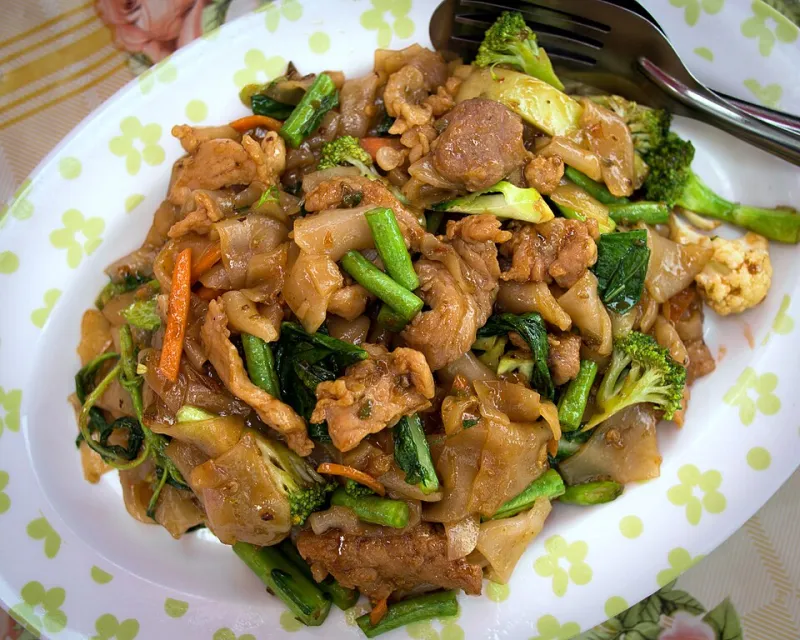
Photo: Takeaway, CC BY-SA 3.0, via Wikimedia Commons
A British pub night has its own logic: a pint, a packet of crisps, maybe a bag of pork scratchings, and the pleasant sense that dinner can wait. Thai kap klaem takes that same instinct and gives it a sharper, brighter edge. The idea is not to replace the pub with a restaurant, but to build a small table of salty, sour, crunchy things that make a beer taste better and a conversation run longer.
Kap klaem is a way of eating, not a recipe
Loosely translated, kap klaem means drinking food. In Thailand it covers a wide range of snacks and small dishes served with beer or spirits: grilled sausages, minced meat salads, peanuts, pickles, dried fish, fruit. The common thread is intensity. These are not bland nibbles. They are salty enough to make you reach for your glass, sour enough to wake up your palate, and crunchy enough to keep the table lively.
That makes kap klaem a natural fit for a British pub-at-home evening. We already understand the pleasure of several small, punchy things rather than one big plate. The difference is the seasoning. Instead of salt and vinegar, think lime and fish sauce. Instead of a bag of peanuts, think peanuts tossed with makrut lime leaves and chilli.
Start with larb, but keep it bright
Larb is the obvious entry point, and for good reason. It is quick, flexible and tastes like more than the sum of its parts. Use minced pork or chicken, but do not treat it like a Bolognese. The meat should be cooked through without being browned to death. You want it loose and juicy, ready to soak up lime juice, fish sauce and a little chilli.
Toast raw rice in a dry pan until it smells nutty, then grind it coarsely. That toasted rice powder is what gives larb its gentle crunch and savoury depth. Finish with plenty of herbs: mint, coriander, Thai basil if you have it, and sliced red onion or Thai shallots. Serve it in a small bowl with cucumber and lettuce leaves for scooping. It should taste sharp and herby, not heavy. A cold lager is the obvious partner, but a dry cider works too.
Sai ua: buy, slice, fry
Sai ua is a Northern Thai sausage packed with lemongrass, chilli, garlic and makrut lime leaf. Making it from scratch is a project; buying it is a shortcut worth taking. Thai grocers and online Asian supermarkets in the UK often sell it frozen. Slice it on the bias, fry the slices until the edges crisp and the fat renders, and serve them hot with cucumber or pickled ginger.
If you cannot find sai ua, do not try to reinvent it with a supermarket Cumberland. Instead, choose a good coarse pork sausage and serve it with a dipping sauce of lime, fish sauce and chilli. It will not be the same dish, but it will still follow the kap klaem logic: salty, rich, sharp, cold beer.
Peanuts, makrut and a hot pan
Roasted peanuts are the easiest win on the table. Buy plain roasted peanuts, tip them into a bowl, and add shredded makrut lime leaves, sliced red chilli, a pinch of salt and a little fried garlic if you have it. For extra aroma, briefly fry the shredded leaves in a little oil until crisp, then toss everything together while the peanuts are still warm.
Makrut limes are available from Thai grocers and some larger supermarkets, and the leaves freeze well. This is the kind of snack that disappears before the first pint is finished. It also makes a convincing case for keeping a bag of peanuts in the cupboard for exactly this sort of evening.
Quick pickles for cut-through
A kap klaem table needs something sharp and cooling. A quick pickle of cucumber, red onion or shallot, chilli, vinegar, sugar and salt takes twenty minutes and keeps for a few days in the fridge. It is not a traditional Thai pickle in every detail, but it does the job: it cuts through the sausage, cools the chilli and gives the table a fresh, crunchy element.
You can also add a small bowl of sliced cucumber and a plate of herbs. Do not dismiss the simple things. A few leaves of lettuce, some coriander stems and a wedge of lime are part of the point.
Set the table like a bar, not a dinner party
Resist the urge to turn this into a three-course meal. Put everything out at once, or in two quick waves. Use small plates, a low table if you have one, and plenty of napkins. The food should look abundant but not formal. For four people, 300g of minced pork for larb, 200g of sliced sai ua, a bowl of peanuts and a jar of pickles is plenty. Add extra cucumber and lettuce for scooping.
Drinks matter here. Lager, cider and a dry bitter all work. If you are opening something stronger, keep the food salty and sour to match. The aim is not to get drunk; it is to make a few drinks feel like a generous spread.
Shopping and prep notes for British kitchens
Most of the ingredients are already in reach: fish sauce, limes, chillies, peanuts, cucumber, red onion and herbs. For sai ua, makrut leaves and Thai basil, a Thai grocer or online Asian supermarket is your friend. Toasted rice powder can be made at home in ten minutes. Make the pickles and prep the herbs ahead; cook the larb just before you eat.
Sukhothai Kitchen is built around the idea that regional Thai cooking belongs in British kitchens, and kap klaem is a good example. It is not a performance. It is a way of making a pub night at home feel a little more vivid, one sharp, salty, crunchy plate at a time.