Backbone in a Jar: A British Cook’s Guide to Kapi Shrimp Paste
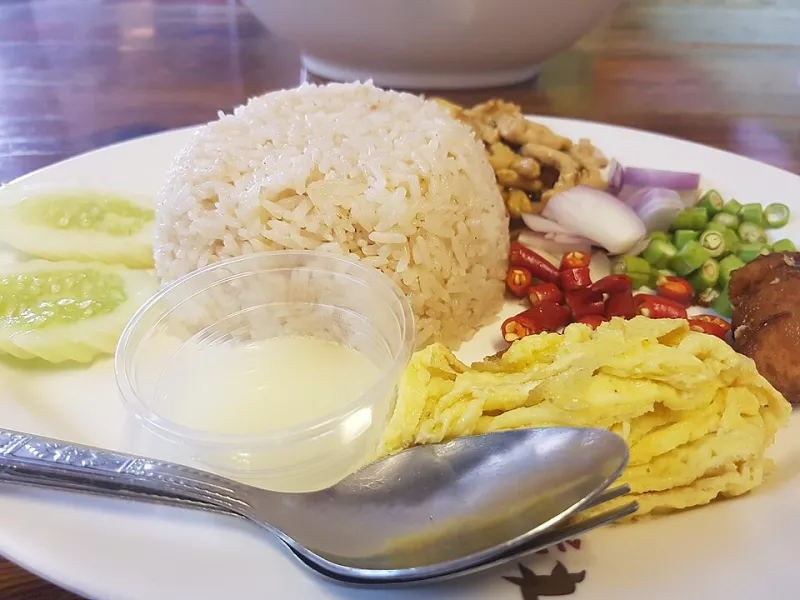
Photo: Bitterschoko, CC0, via Wikimedia Commons
There is a small, unglamorous jar that quietly decides whether a Thai curry tastes like a rounded, savoury whole or like coconut milk with a chilli kick. It smells like low tide, looks like dark putty and goes by the name kapi. British recipe pages often mention it in passing, then move swiftly on. That is a shame, because kapi is one of the most useful things you can keep in a UK kitchen once you know how to handle it.
It is not fish sauce with a thicker accent
Kapi is fermented shrimp paste, a staple of Thai cooking that turns up in curry pastes, relishes, stir-fries and dipping sauces. Fish sauce is the liquid seasoning you splash in at the end; kapi is the dense, salty, fermented ingredient that gives a dish its bass note. Both add savouriness, but they are not interchangeable. A spoonful of kapi brings a funky, sweet-savoury depth that no amount of fish sauce will replicate on its own.
In Thai kitchens, kapi is often treated as a seasoning rather than a starring ingredient. It is there to make everything else taste more like itself. That is the useful bit for British cooks: you do not need to love the smell of kapi straight from the jar. You need to know how to cook with it.
Buying kapi in Britain without a translator
You will usually find kapi in Asian grocers, Thai supermarkets and online Thai food shops. It tends to sit with the curry pastes, dried shrimp or chilled ingredients rather than in the general sauce aisle. Some jars are soft and wet, others are firmer blocks. For a first purchase, a soft paste in a small jar or tub is easier to scoop and measure.
Read the label. Good kapi is usually a short list: shrimp, salt, sometimes sugar. You are looking for a pinkish-grey to dark brown paste with a clean, fermented smell, not an ammonia hit. If a jar is bulging, discoloured or has a fuzzy surface, leave it. You may also see belacan, the Malaysian shrimp paste. It is a close relative, but it is not the same thing. For Thai recipes, look for Thai kapi.
Storage: keep it cold, keep it covered
Kapi is powerful, and it does not need much encouragement to perfume the inside of a fridge. Keep it in an airtight jar, ideally inside a second bag or tub, and store it in the fridge once opened. A clean spoon every time will help it last. Most jars keep for months this way, and you can freeze small portions if you are a slow user. Do not leave it sitting on the counter between uses. This is not a condiment that improves with fresh air.
Taming the beast: roast, fry, taste
Raw kapi is intense. Thai cooks often mellow it by roasting or frying before it goes into a dish. You can wrap a teaspoon of kapi in foil and dry-roast it in a pan or a low oven until it smells nutty and savoury rather than raw. Or fry it gently in oil with garlic or chilli, then build the rest of the dish around it. The heat softens the edges and rounds out the fermented tang.
Be careful with the heat. Kapi can go from fragrant to acrid very quickly, and burnt shrimp paste is not a flavour you want to rescue. Keep the pan low, stir often and open a window. A little ventilation is not a sign of weakness.
Where a teaspoon goes a long way
If you are using a shop-bought Thai curry paste, a quarter teaspoon of kapi added to the pan with the paste can give it a savoury backbone it may be missing. The same trick works in a stir-fry: fry the kapi with garlic and oil first, then add your protein or vegetables. It is excellent in nam prik, the chilli relishes that sit alongside rice and vegetables, and it can lift fried rice, marinades and simple vegetable dishes.
Add it early, in small amounts, and taste as you go. Kapi is salty, so adjust your fish sauce afterwards rather than before. A little goes a long way, and a jar will last far longer than a bunch of herbs.
The supermarket sauce problem
Many British supermarket Thai sauces are built around sweetness, salt and coconut milk. They can be perfectly pleasant, but they often lack the fermented savoury depth that makes a Thai curry taste complete. A small amount of kapi is one of the quickest ways to close that gap. It will not turn a jarred sauce into a restaurant dish on its own, but it can stop a curry tasting flat.
A note for vegetarians and seafood avoiders
Kapi is shrimp paste, so it is not vegetarian. There is no direct substitute that behaves in the same way. If you are avoiding seafood, use fermented soybean paste, mushroom soy or extra dried mushrooms for savouriness, but do not expect the same result. It is better to make a different dish than to pretend a swap is the same thing.
At Sukothai Kitchen, we treat kapi as a pantry backbone rather than a novelty. Buy a small jar, label it clearly, keep it cold and start with a quarter teaspoon. It will not make your kitchen smell like a Thai market for long. It will make your curries taste more like themselves.