Firm Flesh, Bright Seeds: A UK Shopper’s Guide to Thai Aubergines

Photo by Photo by Kelvin Zyteng on Unsplash on Unsplash
Thai aubergines have a way of looking like a test. They turn up in recipes as neat little golf balls, or as a cluster of pea-sized spheres still attached to their stems, and the average British supermarket shopper can be forgiven for hesitating. They are not the fat, glossy purple aubergines we know from ratatouille and moussaka. They behave differently, taste differently and, frankly, need to be treated differently.
At Sukothai Kitchen, we think they are worth the small leap of faith. Thai aubergines bring a gentle bitterness, a firm bite and a knack for soaking up curry sauce without collapsing into pulp. Once you know which one you are holding, the rest is straightforward.
Two little greens, not one
The first thing to untangle is the name. “Thai aubergine” is used for more than one ingredient, and British shoppers often meet two main types.
Pea aubergines are the tiny ones, usually green and no bigger than a pea or a small marble. They are sold in clusters, sometimes still on the stem, and they have a distinct, slightly sharp bitterness. You will see them in green curry, in relishes and in some southern Thai dishes. They are not meant to be soft and melting. Their job is to give a little pop and a bitter edge against coconut milk, chilli and herbs.
Apple aubergines — also called Thai eggplants, or sometimes round green aubergines — are larger, roughly the size of a golf ball or a small egg. They can be pale green, white, or green with white streaks. Their flesh is firmer than a Mediterranean aubergine and their seeds are small and pale. Sliced or quartered, they hold their shape in curries and stir-fries. They are the ones to reach for when a recipe says “Thai aubergine” without further detail, unless it specifically mentions pea aubergines.
There is also the long, thin Asian aubergine, often pale purple or green, which is a useful substitute in many dishes. But for the little round ones, the two categories above are the ones to know.
Where to find them in Britain
For pea aubergines, your best bet is an Asian grocer, particularly Thai, Vietnamese or broader South East Asian shops. They are often sold fresh in small bags or trays, and frozen versions are common too. Frozen pea aubergines are genuinely useful: they keep well, and because they are going into a simmering curry anyway, the texture difference is modest.
Apple aubergines are easier to find than they used to be. Larger supermarkets with a decent world foods section sometimes stock them, especially in areas with a strong South Asian or South East Asian community. Thai and Vietnamese grocers will usually have them, and they also appear in some Chinese supermarkets. If your local shop does not stock them, ask. Greengrocers in bigger cities can often order them in.
When buying, look for firm, unblemished skins and fresh-looking stems. Avoid any that feel spongy or have soft brown patches. Pea aubergines should be firm and bright, not shrivelled. At home, keep them in the fridge in a paper bag or a loose plastic bag and use them within a few days. They do not need to be washed until you are ready to cook.
Prep without the mush
Thai aubergines are not difficult, but they are sensitive to overcooking. The aim is tender flesh with a little resistance, not a collapse into grey nothingness.
For apple aubergines, cut off the stem and quarter them lengthways, or cut them into wedges about the size of a small plum. If the seeds look large and brown, scoop out the spongy centre, though small-seeded ones can be cooked as they are. Some cooks soak the cut pieces in lightly salted water for ten minutes to draw out bitterness, then rinse and pat dry. This is optional. If your aubergines taste particularly bitter raw, it helps; if they are mild, skip it.
For pea aubergines, trim the stems but leave the little spheres whole. If they are on a shared stem, break them into small clusters. Do not bother salting them. They are meant to be bitter, and that bitterness is part of the point.
The real rule is this: do not boil them to death. In a curry, add apple aubergines about ten to twelve minutes before the end of cooking, and pea aubergines about five to seven minutes before the end. They should be just tender. In a stir-fry, fry them first in a little oil until the skin blisters and the flesh softens, then set aside while you cook the rest. That way they keep their shape and do not turn watery.
If you are roasting them, toss with oil and salt and give them a hot oven — around 220°C fan — for fifteen to twenty minutes, until the edges are browned. They will shrink and soften, but they will not go mushy.
Three unfussy ways to use them
Green curry is the obvious home, but Thai aubergines can do more in a British kitchen.
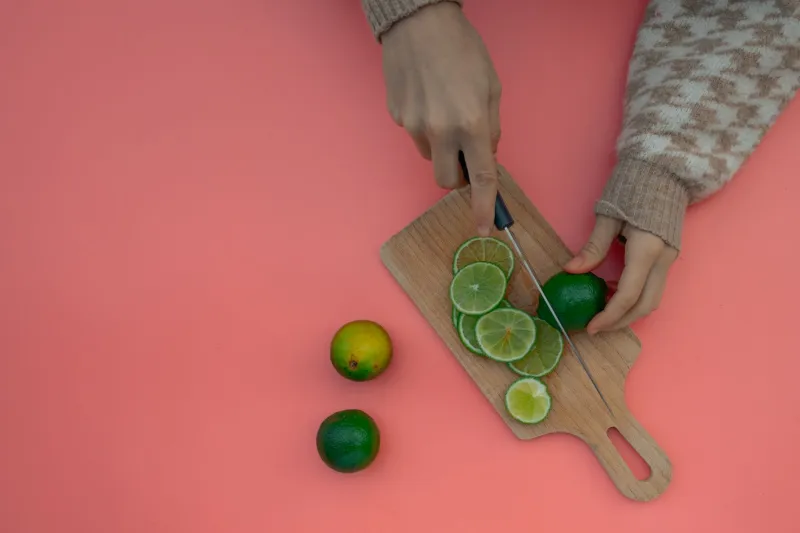
1. Blistered with chilli and lime. Quarter apple aubergines, toss with oil and a little salt, and roast until browned. While they are hot, dress them with lime juice, fish sauce, sliced red chilli and a handful of coriander. This is a sharp, warm salad that works alongside grilled chicken or fish. Pea aubergines can be used too, fried whole until blistered and tossed in the same dressing.
2. Stir-fried with holy basil. This is the weeknight move. Fry chopped garlic and chilli in a hot wok, add quartered apple aubergines and stir-fry until they start to soften. Splash in soy sauce, a little oyster sauce and a pinch of sugar, then finish with a big handful of holy basil or Thai basil. Serve with rice. The aubergines drink up the savoury sauce and keep a pleasant bite.
3. Roasted with tamarind and sesame. For a more British-oven-friendly approach, roast apple aubergines with oil until tender, then glaze with tamarind paste, palm sugar and a splash of fish sauce. Return to the oven for five minutes, scatter with sesame seeds and spring onion, and serve with rice or as a side to roast pork. The sour-sweet glaze cuts through the aubergine’s gentle bitterness.
A small ingredient with a clear voice
Thai aubergines are not a bland substitute for the big purple ones. They have their own texture and their own slight bitterness, and that is exactly why they work. They stop rich curries from becoming heavy and they add a little green freshness to the plate.
If you have only ever bought the large supermarket aubergine, start with a handful of apple aubergines. Quarter them, fry them until browned, and dress them with lime and fish sauce. It is a small, useful first step — and a good way to let a little green bite into your British kitchen.