The Perfume Leaf: A UK Cook's Guide to Buying and Using Makrut Limes
What's in a Name?
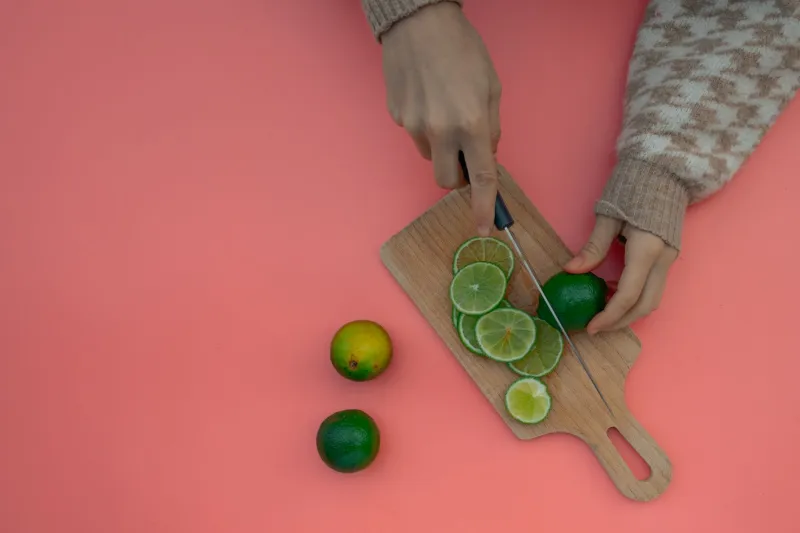
Start with the awkward bit. The leaf sold as 'kaffir lime' is more accurately makrut lime (Citrus hystrix). The k-word is a slur in South Africa, and many UK Asian grocers, recipe writers and Thai chefs have moved to makrut. You'll also see 'Thai lime', 'wild lime' and 'Mauritius papeda' on labels. They all point to the same double-jointed, glossy leaf with a perfume that sits somewhere between lime zest, lemongrass and a flower shop. In a British supermarket you're most likely to meet the fruit — knobbly, dark green makrut limes — before the leaf. The leaves are the useful part for Thai cooking.
Fresh, Frozen, or Dried: The UK Buying Reality
Fresh is best. Look in Asian grocers, Thai supermarkets and the bigger Chinese cash-and-carrys; leaves are usually sold in small bags, sometimes still on the stem. Quality varies wildly. A good leaf is firm, glossy and snaps when you bend it. Avoid anything limp, yellowing or with brown patches. Some Waitrose and M&S food halls stock fresh makrut leaves in the herb section, but it's inconsistent and often expensive.
Frozen leaves are the British cook's quiet hero. They're picked and frozen quickly, and the perfume survives far better than most people expect. You'll find them in the freezer cabinets of Asian supermarkets, sometimes online. Buy a couple of bags, keep them in the freezer and take out what you need. They don't need defrosting before they go into a curry.
Dried leaves are where the disappointment lives. Drying flattens the citrus oils and leaves you with something that looks like a bay leaf and tastes like a faint memory. If a recipe insists on dried makrut, use twice as many and accept that the dish will be less perfumed. Better to use frozen or fresh.
How to Store and Prep
Fresh leaves keep for about a week in the fridge if wrapped in damp kitchen paper and bagged. For longer storage, freeze them whole in a zip-lock bag; they'll darken but keep their flavour for months. Don't bother thawing — tear them straight into the pot.
Prep is simple but important. Tear or crush the leaf to release the oils. If you're infusing a curry or soup, add whole leaves and fish them out before serving; they're tough and not meant to be eaten. For salads or stir-fries where the leaf is shredded, remove the central stem first, then slice into fine hairs. A sharp knife helps; so does a very sharp pair of scissors.
Where a Lime Leaf Earns Its Keep
The leaf is not a universal Thai ingredient. It belongs in coconut-based curries — green, red, panang — and in soups like tom yum and tom kha. It's also good in Thai-style fish cakes (tod mun pla) and some stir-fries, especially those with seafood. It does not belong in every wok dish. Adding a lime leaf to a basil-heavy pad kra pao is like putting vanilla in a curry: not illegal, just confused.
A good rule: if the dish has coconut milk, lemongrass or galangal, a lime leaf will probably fit. If it's a dry, soy-driven stir-fry, leave it out.
When You Can't Find Them
There is no perfect substitute. Lime zest gives you the citrus edge but not the floral top note. A combination of lime zest and a little lemongrass can approximate the perfume in a curry, but it won't fool anyone. Bay leaf is not a substitute; it adds a different, resiny note. If you're stuck, use lime zest and accept the compromise. Then order frozen leaves online for next time.
Makrut leaves are not a garnish. They're a seasoning, and they're worth seeking out. Once you've smelled a fresh one torn under your nose, you'll understand why Thai cooks are so particular about them.