Beyond Coconut Cream: Why British Thai Food Needs a Sharper Edge
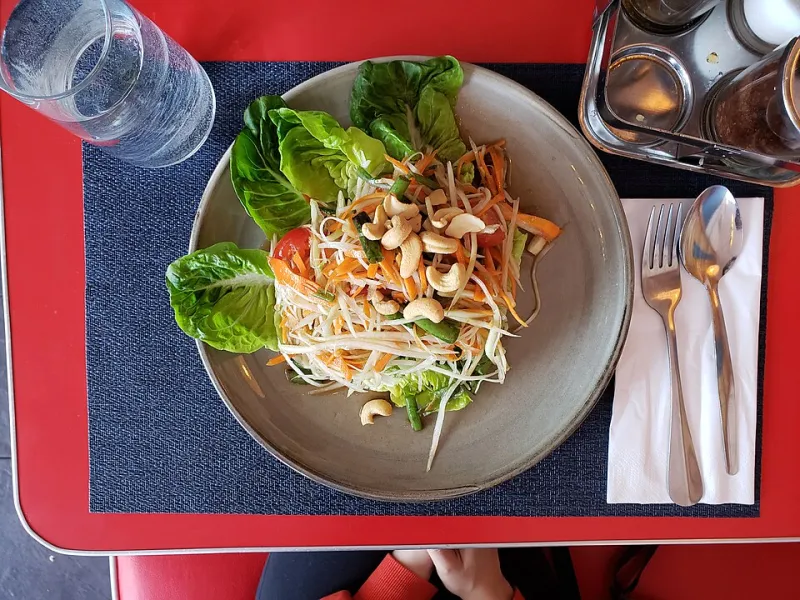
Photo: Andy Li, CC0, via Wikimedia Commons
British Thai food has a sweetness problem. Not everywhere, and not always, but often enough that a green curry can taste like coconut cream with a hint of chilli, and a pad Thai can land closer to sweet-and-sour than the taut, savoury, lime-sharp dish it can be. This is not a complaint about crowd-pleasing cooking. It is a plea for the other half of the Thai flavour equation.
The coconut cream comfort trap
Sweetness sells. On a wet Wednesday in a British high street, a bowl of coconut-heavy curry with a soft, sugary finish is comforting, familiar and easy to like. Restaurant menus have learned that lesson well. Supermarket curry kits have learned it too. The result is a version of Thai food that is rich and rounded, but often missing the jolt that makes the real thing so compelling.
Palm sugar and coconut cream are not villains. They are essential in many Thai dishes, and a little sweetness can round off a fierce chilli or a strong fish sauce. The problem is when sweetness becomes the main event. When every dish is sweet, the meal flattens. You stop noticing the lime, the galangal, the fermented shrimp paste and the fresh herbs. You lose the contrast that Thai cooking is built on.
Thai food is not one flavour
Thailand is a large country with distinct regional kitchens. Isan cooking in the north-east leans on lime, tamarind, chilli, fermented fish and herbs. Northern Thai food brings bitter notes from local vegetables and herbs, alongside grilled meats and relishes. Southern cooking is fiery, sour and salty, shaped by the sea. Even within one region, a meal is a balancing act: sour against sweet, salty against bitter, soft against crunchy.
British Thai menus often draw from a narrow repertoire: green curry, red curry, pad Thai, massaman, sweet chilli stir-fries. These dishes are delicious, but they are not the whole story. When home cooks only see the sweet, coconut-rich side, they miss the sharper, more herbal and fermented flavours that make regional Thai cooking so alive.
What sour, bitter and salty actually do
Sourness is not just lime juice. Tamarind gives a deep, fruity sourness. Fermented fish sauce gives salt and savoury depth. Pickled garlic and shallots add a clean, sharp edge. Bitter notes come from charred chillies, bitter melon, Thai aubergine and fresh herbs. Salt comes from fish sauce, shrimp paste and dried shrimp. These are the flavours that make a dish taste bright rather than heavy.
A good som tam is a useful example. It is sour, salty, hot and sweet all at once, but the sweet element is a support act, not the star. A good larb is the same: lime, fish sauce, chilli, toasted rice powder and herbs, with just enough sugar to bring everything together. British cooks can borrow that approach without abandoning the dishes they already love.
Recalibrating familiar dishes
Start with green curry. Instead of using a whole tin of coconut cream and a spoonful of sugar, use less coconut cream and loosen the sauce with chicken stock or water. Add extra makrut lime leaves, Thai basil and fish sauce at the end. Taste before adding sugar; often the curry paste already contains enough. A squeeze of lime off the heat can make the whole bowl taste lighter and more savoury.
Pad Thai is another candidate. The best versions are tamarind-forward, with lime, fish sauce and a little palm sugar rather than a syrupy sauce. If you make it at home, reduce the sugar and increase the tamarind. Add dried shrimp or salted turnip for depth. Serve with lime wedges and extra chilli so each person can adjust the balance.
Tom yum benefits from restraint too. The lime juice should go in off the heat so it stays sharp. Fish sauce should season the broth, not just add salt. A few slices of galangal and lemongrass, bruised rather than chopped, give aroma without heaviness. If you usually add sugar, try leaving it out and tasting first.
A British pantry for sharper flavours
You do not need a specialist Thai larder to move in this direction. Most UK supermarkets now stock fish sauce, tamarind concentrate, limes, lemongrass and Thai basil. Asian grocers will have makrut lime leaves, galangal, dried shrimp and pickled garlic. Frozen makrut leaves are a good standby and keep for months.
Keep a small bottle of tamarind concentrate in the fridge. Buy fish sauce you actually like the taste of, not just the cheapest bottle. Have limes in the fruit bowl and use them generously. A jar of chilli flakes or dried chillies gives you heat without relying on sweet chilli sauce. These small changes make it easier to cook with sour, bitter and salty flavours without planning a special shopping trip.
Start with one dish
You do not have to rewrite your whole approach to Thai cooking. Pick one dish you already make, reduce the sugar by half, and add a little more lime or tamarind at the end. Taste it. Then decide whether it needs more fish sauce, more herbs or more chilli. That simple act of tasting and adjusting is the heart of Thai cooking.
British kitchens are well set up for this. We have good limes, excellent fresh herbs and a growing network of Asian grocers. The missing ingredient is often confidence. Thai food is not meant to be uniformly sweet and creamy. It is meant to wake up your palate. Once you get used to that sharper edge, the familiar takeaway versions can start to taste a little one-note. The good news is that the fix is usually close at hand: a lime, a bottle of fish sauce and a lighter hand with the sugar.