The Chilli Aisle, Decoded: A British Cook's Guide to Thai Heat
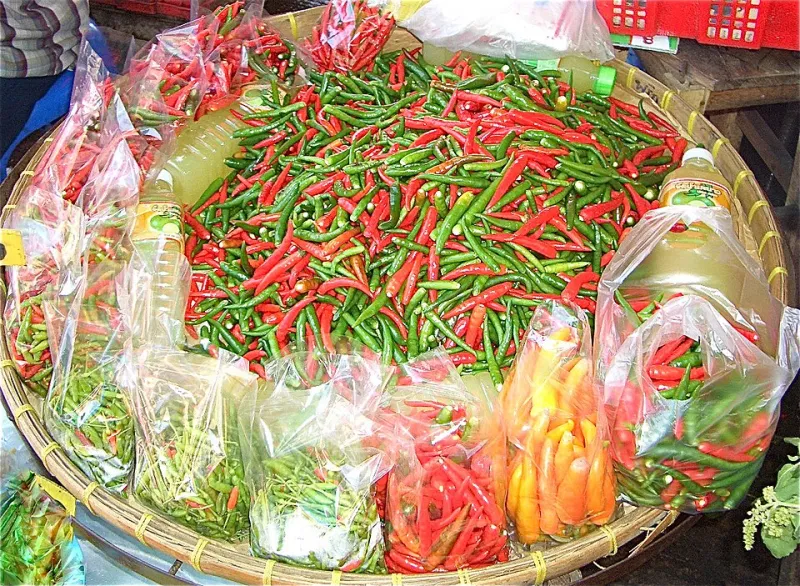
Photo: Susan Slater, CC BY-SA 4.0, via Wikimedia Commons
Thai cooking is often reduced to a heat scale, but the chilli aisle tells a more interesting story. In Britain we are lucky: the range of fresh, dried and frozen Thai chillies available in Asian grocers, supermarket world-food aisles and online spice shops has never been better. The trick is knowing which chilli you are holding, what it brings beyond fire, and when a British-grown stand-in will do the job.
Read the shelf before you trust the label
UK labelling can be loose. A pack marked 'Thai chillies' is usually bird's eye, but not always. 'Red chillies' might mean long spur chillies or generic finger chillies. If you are following a regional recipe, look at shape, size and colour rather than the sticker. Small, thin and pointed usually means heat; long, wide and glossy usually means a gentler, fleshier chilli. Heat levels below are rough guides, not lab results. Chilli heat varies by growing conditions, and a British summer can make a difference to outdoor-grown fruit. Taste a sliver before you commit.
1. Prik ki nu: the bird's eye
This is the chilli most British cooks already know, even if they call it simply 'Thai chilli'. Small, thin and fierce, prik ki nu usually lands somewhere between 50,000 and 100,000 Scoville units. Green bird's eye chillies are sharper and more grassy; red ones are riper, fruitier and a little rounder in flavour. You will find them in most Asian grocers, many supermarket world-food sections and almost every online Thai ingredient shop.
Use them where you want clean, immediate heat: chopped into nam pla prik with fish sauce and lime, pounded into som tam, or sliced into a quick stir-fry. A little goes a long way, so start with one and build. If you cannot find them, a fresh red finger chilli will give heat, but it lacks the same bright, peppery punch. Add a pinch of dried chilli flakes to the pan if the dish needs more bite.
2. Prik chee fa: the spur chilli
Long, tapered and often sold as 'Thai red chilli' or 'spur chilli', prik chee fa is the middle ground of the Thai chilli world. Expect roughly 5,000 to 30,000 Scoville units: enough to make a curry hum, not enough to overwhelm the coconut milk. The flavour is sweeter and more vegetal than bird's eye, with a fleshy texture that holds up in stir-fries.
This is the chilli to use when a recipe asks for sliced red chilli for colour and gentle heat. It works well in gaeng ped, prik king and simple weeknight stir-fries with chicken and basil. If your local shop only has large, mild red chillies, use one of those and add a small bird's eye for heat. That combination gets you closer than using a hot chilli alone.
3. Prik yuak: the banana chilli
Prik yuak is the mild, pale green or yellow chilli that looks a little like a small banana. It is fleshy, mild and grassy, usually under 1,000 Scoville units, and it is more about texture and aroma than heat. Availability in Britain is patchier: look in larger Asian grocers, frozen sections or specialist online shops.
Use it where Thai cooking wants a gentle chilli presence: stuffed and grilled, sliced into mild curries, or added to a stir-fry for colour without drama. If you cannot find prik yuak, a Romano pepper or a mild jalapeño is a practical British swap. Neither tastes identical, but both give you the fleshy, low-heat quality the dish needs. Add a separately sliced bird's eye at the table for anyone who wants more kick.
4. Prik haeng: dried red Thai chillies
Dried red chillies are the backbone of many Thai curry pastes and relishes. They are usually dried bird's eye or small red chillies, which means the heat is concentrated and the flavour turns toastier, smokier and a little raisined. You will find them in supermarket world-food aisles, Asian grocers and online spice shops, often sold in large bags.
Toast them briefly in a dry pan before soaking or pounding. That extra step wakes up the aroma and makes a homemade curry paste taste much more layered. They are essential for red curry paste, tom yum and nam prik. If you are substituting, dried chilli de árbol is widely available and similar in heat, though it can be a little more aggressive. For a milder paste with good colour, use dried Kashmiri chillies and add a small amount of bird's eye for heat.
5. Prik num: the northern chilli
Prik num is a short, curved chilli from northern Thailand, often green or red, with a medium-hot bite and a fresh, grassy flavour. It is used in northern relishes, sai ua sausage and dipping sauces. It is harder to find in ordinary British supermarkets, but Asian grocers and online Thai suppliers sometimes stock it fresh, frozen or dried.
If you cannot find prik num, use bird's eye but remove some of the seeds and membrane to tame the heat. The result will not be identical, but it will keep the fresh, sharp quality that northern dishes rely on. Serve prik num raw or lightly grilled alongside sticky rice, or pound it into a chilli dip with fish sauce and lime.
6. Prik o: the small round chilli
Prik o is a small, round Thai chilli, often green or red, with a medium heat and a crisp, fresh flavour. It turns up in relishes, curries and stir-fries, and it is more common in specialist Thai shops and frozen sections than on mainstream supermarket shelves. Its shape makes it good for slicing into rings or pounding roughly into pastes.
Use it in nam prik, Thai salads or as a garnish for curries where you want visible chilli without shredding the dish with heat. A cherry bomb or mild jalapeño can stand in at a push, though both are fleshier. If you use jalapeño, slice it thinly and add a little extra fish sauce and lime to keep the dressing bright.
Buying and storing in Britain
Fresh Thai chillies freeze well. Wash and dry them, then freeze whole in a bag and slice from frozen when you need them. Dried chillies keep for months in a sealed jar away from sunlight. If you buy a mixed bag from an Asian grocer, sort it before storing: bird's eye and spur chillies behave very differently in the pan. And do not chase the hottest chilli on the shelf. Thai cooking is about balance, not punishment. The right chilli should make the lime taste brighter, the fish sauce taste savoury and the herbs taste more like themselves.