Cold Mornings, Silky Rice: A Thai Breakfast Case for the British Kitchen
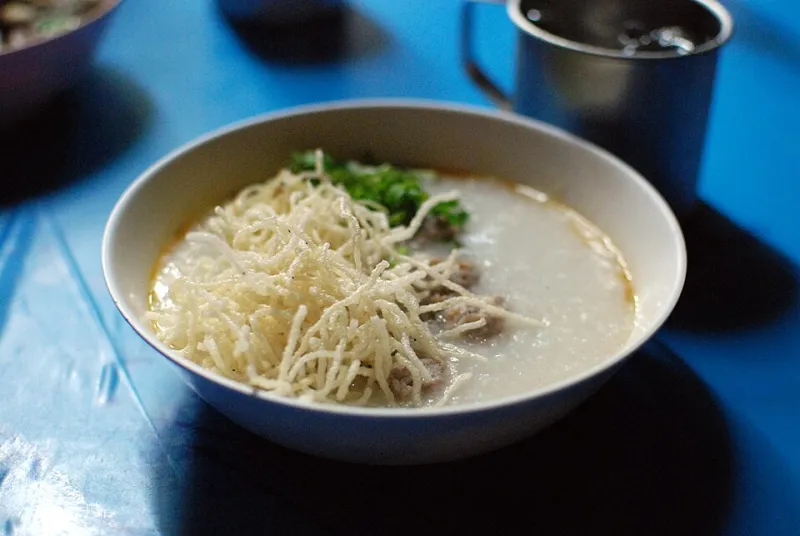
Photo: Takeaway, CC BY-SA 3.0, via Wikimedia Commons
There is a particular kind of British winter morning when the kettle clicks on before the lights do. The window is black, the radiator is making its mind up, and breakfast needs to do more than fill a gap. Usually, that means porridge. Oats, milk, a pinch of salt, maybe honey or jam. It is a good answer. But it is not the only one.
In Thailand, a cold morning is not the usual reason for a bowl of jok. Yet the dish makes complete sense here in Britain from November onwards. Jok is rice porridge cooked down until the grains collapse into something silky and savoury, then finished with ginger, spring onion, white pepper, egg and a little fish sauce. It is soft, steaming and deeply comforting, but it has a savoury edge that cuts through grey skies far better than another sweet bowl.
At Sukothai Kitchen, we are not asking you to abandon oats. We are asking you to make room beside them. Jok is not complicated. It is a template, and once you have the rhythm of it, it becomes as ordinary as toast.
Why jok belongs in a British winter
British porridge habits are built on sweetness: milk, sugar, fruit, syrup. Jok goes the other way. It starts with rice and stock, then builds with salty, savoury, peppery things. The texture is looser than risotto and softer than rice pudding, but it should still have body. You eat it with a spoon, slowly, and the toppings change with every mouthful.
The practical appeal is obvious. It uses cheap ingredients. It can be made from leftover cooked rice in about fifteen minutes, or from raw rice in under an hour. It freezes well, though the texture is best fresh. It can be scaled for one person or a tableful. And it asks for the sort of condiments many British kitchens already have: soy sauce, fish sauce, ginger, garlic, spring onions, eggs, chilli. No special equipment. No trip to a specialist shop, unless you want one.
The cultural appeal is just as strong. Jok is a breakfast food in Thailand, sold from stalls and eaten at home, often with patongo, the long fried dough sticks that are made for dunking. It is not a restaurant performance. It is everyday food, which is exactly why it works on a Tuesday morning when you have ten minutes before a video call.
The supermarket shopping list
For the jok itself, you want rice that will break down. Thai jasmine rice is ideal and widely available in British supermarkets. Short-grain pudding rice will also work, though it gives a slightly different texture. If you want the fastest route, use cooked rice from the night before. Day-old rice collapses quickly into stock, which makes jok a genuinely practical weekday breakfast.
For the base, chicken stock is the simplest choice. A good stock cube or fresh stock from the supermarket is fine. Add sliced ginger, a little crushed garlic and a few stalks of spring onion while the rice simmers. Season with fish sauce and light soy sauce, tasting as you go. A pinch of sugar is not essential, but it can round things out. White pepper is not optional in our house. It gives jok its warm, sneezy edge.
For toppings, think in small bowls rather than one big production. Minced pork browned with garlic and a splash of soy is classic. Cooked prawns warmed in the hot jok are excellent. A soft-boiled egg, halved, adds richness. Spring onions, coriander, thin slivers of ginger and crispy fried shallots from a supermarket tub all earn their place. Chilli vinegar is a fine British shortcut: sliced red chilli topped up with white vinegar and left in the cupboard.
Building the bowl without fuss
Start with about 100g of cooked rice per person, or 50g of raw rice. Put it in a saucepan with roughly 400ml of stock per person. Bring it to a gentle simmer, then let it cook until the rice has broken down and the liquid has thickened. Stir now and then so it does not catch. If it looks stiff, add more stock. Jok should be spoonable, not set.
Once the rice is soft, season with fish sauce, light soy and a little salt if needed. Add grated or finely sliced ginger and a little garlic. Taste again. The seasoning should be savoury and gentle, not aggressive, because the toppings will add more.
Now build. Ladle the jok into warm bowls. Add a spoonful of cooked minced pork or a few prawns. Crack an egg into the hot porridge and stir gently, or top with a soft-boiled egg. Scatter over spring onion, coriander, white pepper and crispy shallots. Put fish sauce, chilli vinegar and extra white pepper on the table. Let everyone finish their own bowl.
The mistake to avoid is overloading the jok at the cooking stage. Keep the base clean and let the toppings do the talking. You want each spoonful to taste slightly different: a little egg here, a little pork there, a sharp hit of vinegar when you need it.
Patongo: the dough stick that makes it a morning
You can eat jok without patongo, but the dough sticks turn breakfast into an occasion. Patongo are long, airy fried dough sticks with a crisp shell and a soft, slightly chewy middle. In Thailand they are torn or cut into lengths and dunked into jok, coffee or condensed milk. In Britain, you can sometimes find frozen youtiao in Asian supermarkets. If you have one nearby, buy a bag and keep it in the freezer. Reheat in the oven or air fryer and you are minutes from breakfast.
If you want to make them, a simple dough is forgiving. Mix 200g plain flour with a teaspoon of baking powder, half a teaspoon of salt and a teaspoon of sugar. Add about 130ml of water and bring it together into a soft dough. Rest it for half an hour, then roll it thin, cut into strips and fry at around 180C until puffed and golden. They are best eaten straight away, which is not usually a problem.
A Sukhothai-inspired morning menu
For a weekend version, make a small table of it. A pot of jok kept warm on the hob. A pan of patongo. Small dishes of spring onion, coriander, crispy shallots, chilli vinegar and extra fish sauce. Soft-boiled eggs. Maybe a pot of strong tea. It is a generous breakfast without being a full English, and it asks people to help themselves.
For a weekday version, keep it lean. Leftover rice, stock, ginger, fish sauce, a spring onion and an egg. No patongo, no performance. The bowl still works. That is the point of jok: it meets you where you are.
British mornings do not need a single answer. Porridge has earned its place. But jok deserves a place beside it, especially when the sky is low and the kitchen is cold. Make it once, keep fish sauce near the hob, and see what happens.