Your Gravy Boat Has Competition: Nam Prik and the British Sunday Roast
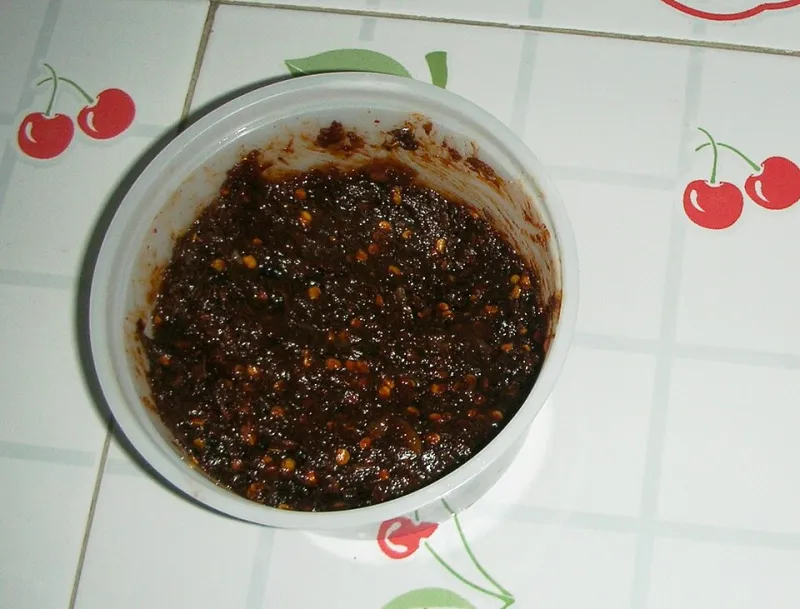
Photo: Xufanc, CC BY-SA 4.0, via Wikimedia Commons
The British Sunday roast has a well-drilled support cast: gravy, mustard, horseradish, mint sauce, maybe a spoonful of redcurrant jelly. It is a comforting line-up, but it is not the only one. In Thailand, a small bowl of nam prik can do the same job as all of those condiments at once: sharp, salty, sweet, hot and just fermented enough to make every mouthful sit up.
That is not a gimmick or a fusion stunt. Nam prik is everyday Thai table food, the kind of thing that sits next to rice, vegetables and grilled meat without anyone making a fuss about it. For British cooks, it is probably the most useful Thai condiment in the fridge: a jar that can lift roast chicken, cold potatoes, a cheese sandwich or a plate of leftover beef. Think of it as Thai mustard with a bit more attitude.
What nam prik actually is
Nam prik is not one recipe. It is a family of chilli-based relishes and dips, usually pounded together in a mortar, though a small food processor will do. Some are loose and spoonable; others are thick, dark and jammy. The constants are chilli heat and a careful balance of salt, sour, sweet and savoury. Fish sauce or shrimp paste supplies the salt and depth. Lime or tamarind brings the sour edge. Palm sugar, or light brown sugar in a UK kitchen, rounds things off.
It helps to stop thinking of nam prik as a dipping sauce for a specific Thai dish. It is a condiment with backbone, designed to be eaten in small amounts alongside plainer food. That makes it a natural fit for a roast, where so much of the plate is mild, rich and comforting.
The styles worth knowing
Nam prik pao is the one most British cooks will recognise from jars. It is a roasted chilli jam, deeply savoury and slightly smoky, usually made with dried chillies, garlic, shallots, shrimp paste, tamarind and palm sugar. It is sweet, but not in a sugary way. A teaspoon is enough to wake up roast chicken skin or a piece of sharp Cheddar.
Nam prik kapi is fiercer. It is built around Thai shrimp paste, with garlic, chillies, lime juice and fish sauce. It has a savoury, fermented punch that works beautifully with roast pork or chicken, but it needs a light hand. Start with a quarter teaspoon, not a tablespoon.
Nam prik noom comes from northern Thailand and is greener, fresher and more immediate. Roasted green chillies, garlic and shallots are pounded with fish sauce and lime. It is sharp and herbal, and it is excellent with cold roast potatoes, roast carrots or anything that needs cutting through.
Nam prik ong is a northern tomato and pork relish, thicker and heartier than the others. It is less of a storecupboard project for a Sunday afternoon, but worth seeking out if you want to go deeper into regional Thai cooking.
Build a pantry version with supermarket kit
You do not need a Thai market to make a decent nam prik. Most UK supermarkets now stock dried red chillies, garlic, shallots, fish sauce, lime and some form of shrimp paste in the world foods aisle. Tamarind paste or concentrate is common, and palm sugar can be swapped for light brown sugar. A mortar and pestle gives the best texture, but a small food processor works if you pulse rather than purée.
Here are three approachable versions to keep in the fridge.
Quick nam prik noom
Dry-roast six green bird's eye chillies, three garlic cloves and two shallots in a hot pan until charred in patches. Pound them with a pinch of salt, then stir in one tablespoon of fish sauce, the juice of one lime and a teaspoon of light brown sugar. Taste and adjust. It should be hot, sour and slightly salty. Keep it for three or four days.
Nam prik kapi
Pound two garlic cloves with three red bird's eye chillies and a teaspoon of Thai shrimp paste. Add one tablespoon of lime juice, one tablespoon of fish sauce and a teaspoon of palm sugar. Pound to a rough paste, then taste. It should be intense, so serve it in a small bowl with a teaspoon. It keeps for about a week in the fridge.
Cheat's nam prik pao
Soak six dried red chillies in hot water for twenty minutes, then drain. Fry four sliced shallots and four garlic cloves in two tablespoons of oil until golden. Add the chillies, a teaspoon of shrimp paste, one tablespoon of tamarind paste, one tablespoon of palm sugar and one tablespoon of fish sauce. Pound or pulse to a coarse paste, then return to the pan and cook gently until jammy. It will keep for a fortnight. If that sounds like too much work, buy a jar and sharpen it with lime juice and a little fish sauce.
How to put it on a Sunday roast
This is where nam prik earns its place in a British kitchen. It does not replace gravy. It sits beside it, adding a sharp, hot, savoury note that makes rich food taste more interesting.
With roast chicken, spoon a little nam prik kapi over the skin, or mix a teaspoon into the resting juices. With cold roast potatoes the next day, nam prik noom is the obvious choice: green, sour and lively against the fat. Sharp Cheddar and nam prik pao is a genuinely excellent pairing, the kind of thing that belongs on an oatcake or in a leftover roast beef sandwich. Try a dab on Yorkshire pudding, too. The sweetness and heat cut through the batter beautifully.
Roast parsnips, carrots and sprouts all benefit from a spoonful stirred through at the end. Even a plain cheese toastie can take a thin smear of nam prik pao instead of chutney. The point is not to Thai-ify the whole roast. It is to add one small, punchy bowl that changes how the rest of the plate tastes.
A word on heat and balance
Nam prik should be bold, but it should not be brutal. British chillies vary in heat, and so do palates. Start with fewer chillies than you think you need, then add more. Fish sauce is salty, so taste before adding extra salt. Sugar should round off the edges, not make the relish sweet. Lime or tamarind should keep it bright.
The best nam prik has a bit of roughness to it. You want texture, not a smooth sauce. A mortar and pestle is worth the effort for that reason, but do not let the lack of one stop you.
At Sukothai Kitchen, we are interested in regional Thai cooking that makes sense in British kitchens. Nam prik fits that brief neatly. It is not a restaurant garnish or a specialist ingredient you use once. It is a practical, flexible condiment that belongs next to the gravy boat, ready for roast chicken, cold potatoes and a sharp piece of Cheddar.