Lacy Edges, Golden Puff: The Thai Omelette That Beats a Late Takeaway
It is 6.40pm on a Tuesday in November. The kitchen window is black, the radiator is doing its best, and the inside of the fridge offers half a cucumber and a slightly tired spring onion. This is the exact moment when a takeaway starts to feel reasonable — and the exact moment when khai jiao, the Thai omelette, quietly saves the evening.
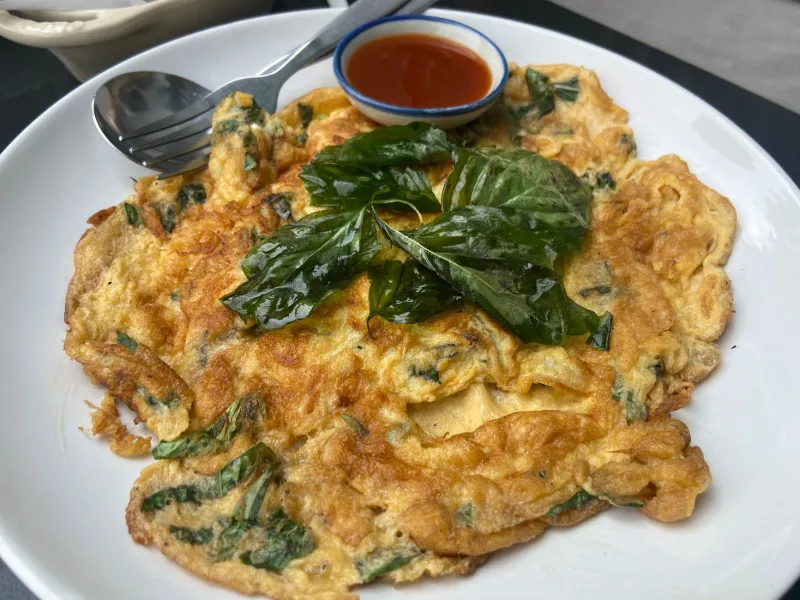
Khai jiao is not the pale, folded, delicately trembly omelette of a Sunday brunch. It is loud. It goes into a lot of very hot oil and comes out with a ruffled, bubbly perimeter, a crisp underside and a middle that is still soft and custardy. In Thailand it is street food, home food, a thing you order alongside som tam or spoon over rice when nobody can be bothered. In a British kitchen in the dark half of the year, it is close to perfect.
Why it belongs in your winter rotation
Three eggs, a splash of fish sauce, a squeeze of lime, a handful of rice and a few minutes at the hob. That is the whole proposition. No marinating, no shopping list of twelve aromatics, no oven preheating while you wait for the kitchen to warm up. It is cheap enough that you stop doing mental arithmetic about it, and fast enough that it is finished before a delivery rider would have found your street.
There is also something quietly cheering about the noise it makes. The hiss when the egg hits the oil, the way the edges frill up within seconds — it is cooking as a small piece of theatre, which is worth a lot on a grey evening.
The technique: hot oil, no stirring, no fear
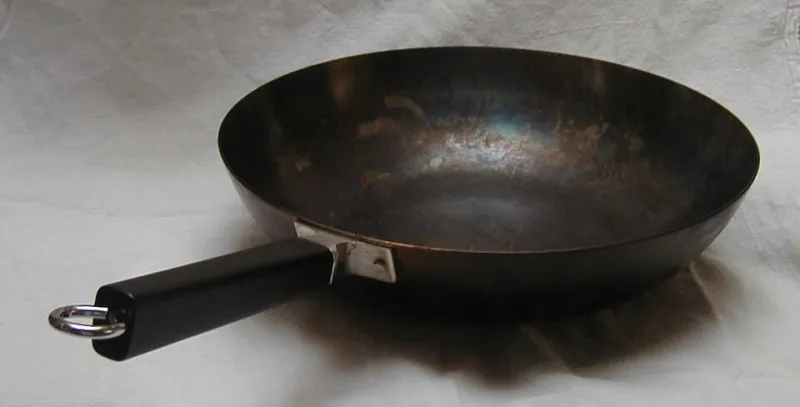
The single biggest reason home versions turn out flat and pale is timidity with the oil. Khai jiao is shallow-fried, not dry-fried. You want roughly four to six tablespoons of a neutral oil — rapeseed is ideal and cheap in the UK — in a wok or a small, deep frying pan. Olive oil will taste of olive oil and smoke at the wrong moment; leave it in the cupboard.
Heat the oil over a high flame until it shimmers and a droplet of beaten egg sizzles the instant it lands. While it heats, beat three eggs with a fork or chopsticks until slightly frothy — you are after air, not a smooth custard. Season with about a teaspoon of fish sauce, a squeeze of lime or a few drops of tamarind water, and a small pinch of sugar. Some cooks add a teaspoon of cornflour or rice flour for extra crunch; it is optional, but it does help the edges hold their crispness.
Now pour the egg in from a height of roughly 15–20cm, in one confident movement. It should billow immediately, puffing up and spreading into a ragged disc. Do not stir. Do not poke. Leave it alone for 40–60 seconds so the underside sets and the edges go deep golden. If you want the top cooked, tilt the pan, lift an edge with a spatula and let the loose egg run underneath — or, if your pan is oven-safe, give it a minute under a hot grill.
Fold it in half, slide it onto a plate lined with kitchen paper, and dab the top. Serve straight away, because the crisp edges are the whole point and they soften as they sit.
Three variations for a British shop
Minced pork and garlic. Fry two cloves of sliced garlic in a little of the oil for twenty seconds before you add the egg, then scatter over a small handful of pork mince browned in the same pan. Supermarket pork mince is leaner than the fatty stuff used in Thailand, so add a teaspoon of oil to the pan first. A pinch of sugar in the egg mix rounds it out.
Prawn and spring onion. Frozen raw king prawns, defrosted and roughly chopped, are excellent here and far better than the cooked ones. Slice two spring onions finely, stir them into the egg with the prawns, and add a few turns of white pepper. If you have a makrut lime leaf, shred one very finely and add it — the perfume cuts through the oil beautifully.
Chilli and herb. One red bird's-eye chilli, sliced, plus a small handful of coriander or Thai basil, goes into the beaten egg just before it hits the pan. Holy basil, if you can get it, is worth the detour to a Thai grocer; ordinary basil will do in a pinch but will not bring the same aniseed punch.
What to put with it
Jasmine rice, plainly cooked, is the obvious answer and the right one. Add cucumber batons, a few leaves of lettuce, and a small bowl of prik nam pla — fish sauce, lime juice, sliced chilli and a little sugar — for spooning over. Sriracha works if you want something sweeter and less sharp. A wedge of lime on the side is not decorative; the acidity matters against all that oil.
If you are feeding two, make two omelettes rather than one big one. A larger pan with more egg gives you a thicker, less crisp result, and the whole charm of khai jiao is the ratio of crunchy edge to soft centre.
A note on extractor fans and smoke alarms
High heat and a decent depth of oil will produce a certain amount of smoke. Turn the extractor on before you start, open a window a crack, and use a pan deep enough that the oil does not spit over the hob. If your smoke alarm is the sensitive type, position a tea towel near it or accept that this is simply the price of crisp edges.
The takeaway will still be there on Friday. Tonight, give the eggs a chance first.