Domestic Hob, Thai Stir-Fry: A Practical Manifesto for British Cooks
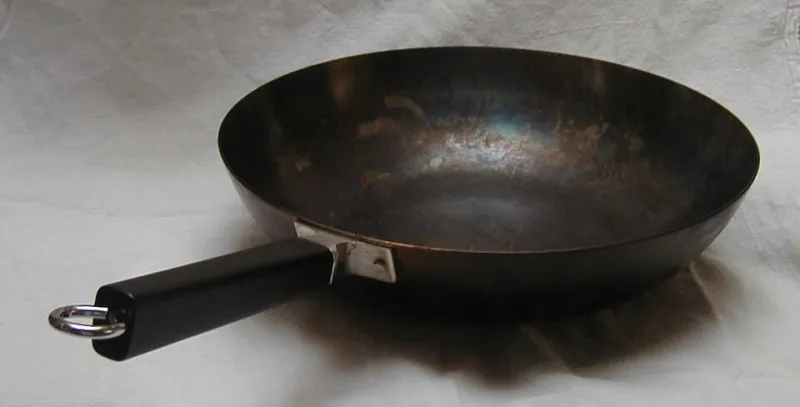
Photo: The original uploader was FiveRings at English Wikipedia., CC BY-SA 1.0, via Wikimedia Commons
The Uncomfortable Truth About Your Hob
Restaurant wok burners produce a roar of heat that a domestic hob cannot match. A commercial burner can hit 30,000 BTUs or more; your kitchen hob is lucky to manage a fraction of that. This matters because Thai stir-frying relies on fast, fierce heat to sear ingredients, drive off moisture and create the toasted, slightly smoky notes that the Thai call wok hei. You cannot fake that entirely at home.
But you can get much closer than most British cooks manage. The problem isn't just the hob. It's the pan, the batch size, the prep and the way we treat stir-frying as a quick after-work default. Stir-frying is fast, but it is not casual. It rewards planning and punishes hesitation.
Pick the Right Pan (It's Not Always a Wok)
A traditional round-bottomed carbon steel wok is a beautiful thing, but it's useless on a flat electric or induction hob. It only touches the heat at one small point, so you get a hot spot and a lot of nothing. If you have a gas hob, a round-bottomed wok can work, but you'll still need a wok ring to stabilise it.
For electric and induction, use a flat-bottomed wok or a large, heavy-based frying pan. Carbon steel is ideal if you can find it; it's light enough to toss and takes a good seasoning. A cast-iron skillet works but is heavy and slow to respond. Non-stick is convenient but not great for high heat. Whatever you choose, the pan should be wide enough to spread ingredients in a single layer, and deep enough to toss without throwing food across the kitchen.
Heat, Oil, and the Art of Not Steaming
Preheat the pan properly. This is the step most home cooks skip. On an electric hob, give it a full five minutes on the highest setting. On induction, two to three minutes is usually enough. On gas, until the pan is visibly hot. Add a high-smoke-point oil — groundnut (peanut), rice bran or rapeseed — and swirl it around. It should shimmer, not smoke aggressively.
The enemy of good stir-fry is water. Wet vegetables, wet meat, wet noodles: they all turn a stir-fry into a steam-fry. Dry your ingredients thoroughly. Pat tofu, chicken and prawns with kitchen paper. Shake beansprouts dry. If you're using a sauce, have it mixed and ready in a bowl, not assembled over the pan while things burn.
Small Batches, Big Flavour
This is the hardest trade-off for British cooks. We like one-pan meals. Thai stir-frying often works best in two or three quick batches. Cook the protein first, remove it, then cook the vegetables, then combine. If you pile everything in at once, the pan loses heat, the ingredients release water and you end up with a soggy stir-fry.
For a weeknight pad kra pao, for example, sear the minced pork or chicken in a hot pan until browned, remove it, then fry the garlic, chillies and holy basil stems, return the meat, add the sauce and finish with basil leaves. It takes ten minutes, not five, but the texture is far better.
A Reality-Checked Method for Pad Kra Pao
Here's a domestic-hob version that works. Put your heaviest frying pan or flat-bottomed wok on the highest heat. While it heats, mix two tablespoons of oyster sauce, one of soy sauce, a teaspoon of fish sauce and a pinch of sugar. Have your minced pork, sliced garlic, chopped bird's-eye chillies and holy basil ready.
Add oil to the pan, then the garlic and chillies. Stir for twenty seconds. Add the pork and press it flat for a moment to get colour, then stir-fry until nearly cooked. Add the sauce and let it bubble. Turn off the heat, toss in the basil and serve with rice and a fried egg. You won't get restaurant wok hei, but you'll get browned meat, a glossy sauce and basil that hasn't turned to black slime.
What You Gain by Accepting the Limits
Once you stop chasing the impossible, domestic stir-frying becomes easier and better. You learn to preheat, to dry, to batch and to have everything within arm's reach. You also learn which dishes suit a home hob: quick vegetable stir-fries, minced meat dishes, noodles like pad see ew (cooked in batches), and simple seafood. Dishes that need extreme heat — whole crab, large prawns, crispy pork belly — are better left to restaurants.
Your hob is not a wok burner. It never will be. But with the right pan, a bit of patience and a willingness to cook in batches, you can make Thai stir-fries that are crisp, savoury and genuinely worth eating. That's not a compromise. It's just British home cooking, done properly.