Low, Slow and Tamarind: Why Thai Braises Belong in a British Winter Oven
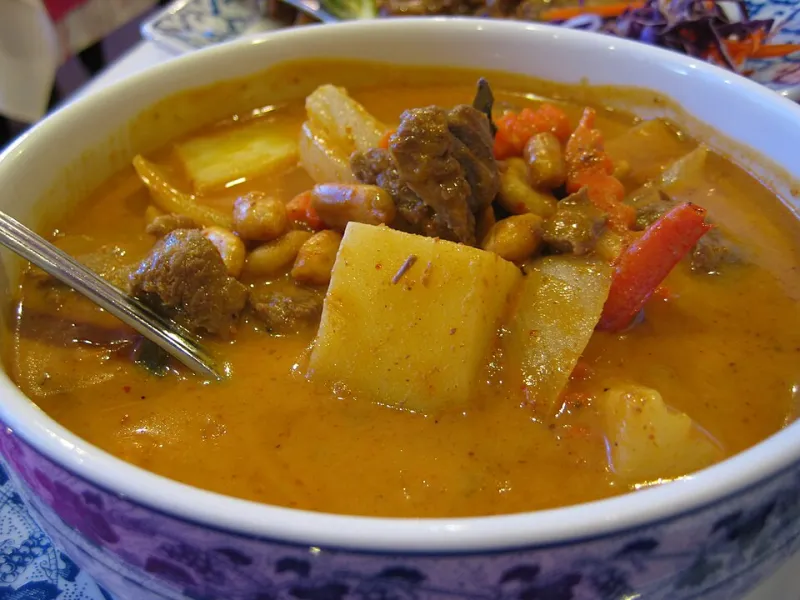
Photo: Ernesto Andrade, CC BY 2.0, via Wikimedia Commons
November does something specific to a British kitchen. The light goes by half four, the radiators start ticking, and the wok begins to feel like an instrument built for warmer people. Yet the dishes that make most sense right now are Thai — just not the fast ones. The cooking that carries northern Thailand through its cool season, and the dishes Thai cooks make when there is time to spare, are the braises: massaman, gaeng hung lay, the long-simmered pots built on coconut, palm sugar and tamarind. They suit a British winter almost embarrassingly well.
Why low and slow beats fast and furious in February
A stir-fry is a performance. It needs a screaming hot pan, dry ingredients, your full attention and a plate waiting before you start. On a Tuesday in Leeds, that is three commitments too many. A braise asks for the opposite: one heavy pot, a cheap cut of meat, two hours of nothing, and a table you can carry the pot to.
There is also the question of what British meat does best. Our native braising cuts — shin, cheek, belly, shoulder, neck — are exactly what Thai curry pots were designed around. Lean diced beef from the supermarket will give you a bowl of grey disappointment; a lump of shin with its sinew intact will collapse into something glossy and sticky after three hours.
Massaman: the gateway braise
Most British cooks meet massaman in a takeaway tub, sweet and mild and studded with potatoes. The real thing is more interesting. It comes from Thailand's Muslim communities — the name is often traced back to 'Mussulman' — with a spice list that owes as much to Persia and the Malay peninsula as to Southeast Asia: cardamom, cinnamon, cloves, star anise, white pepper, mace.
Note what is missing: heat. A good massaman is warm rather than hot, the chilli present but held back. That is precisely why it is the dish to cook for people who insist they don't like spicy food, and why it so often brings reluctant cooks back to Thai food after a bruising encounter with a green curry.
Use beef shin on the bone if your butcher has it, or lamb shoulder if you'd rather. Tamarind and palm sugar go in towards the end; the balance should tilt sour-sweet, never sugary.
Gaeng hung lay: the northern one to graduate to
If massaman is the friendly one, gaeng hung lay is the boss. It arrived in northern Thailand with Shan cooks from over the Burmese border, and it behaves differently: pork belly rather than beef, a great deal of ginger cut into matchsticks, pickled garlic, turmeric, and a sourness that comes from tamarind rather than lime. Many versions use little or no coconut milk, which makes for a denser, more savoury pot — less sauce, more glaze.
It also improves overnight in a way few dishes do. Cook it Saturday, eat it Sunday, and by Monday the pork has taken on the whole paste.
For a quicker middle ground, phanaeng gives you a thick, peanut-and-coconut braise that will be done in ninety minutes and still tastes like a proper dinner.
The cuts to actually buy
- Beef shin, thick-cut. The best value in the shop for braising. Two and a half to three hours.
- Beef short rib. Dearer, richer, almost impossible to overcook. One for a Sunday with people coming over.
- Pork belly. For hung lay. Ask for skin off, and don't trim the fat.
- Lamb neck fillet or shoulder. Lamb and massaman paste is a natural pairing, and neck has exactly the right amount of collagen.
- Chicken thighs, bone in and skin on. A ninety-minute version; drumsticks work too.
Avoid anything labelled 'stewing steak' if it looks dry and uniform. It's usually lean chuck or worse, and no amount of oven time will put back the fat that has been trimmed away.
An oven method that leaves you alone
Brown the meat in batches in a heavy casserole — 3.5 to 4.5 litres is the right size for four to six portions. Set the oven to 150°C fan (170°C conventional). Fry the paste until it darkens and smells toasted, then add the thick top of a tin of coconut milk and let it split so the oil comes out. Return the meat, add the rest of the coconut milk, tamarind, palm sugar and a splash of stock, bring to a simmer, lid on, into the oven. Two and a half hours for shin, three for cheek, ninety minutes for chicken. Take the lid off for the final half hour to reduce.
Layer the paste, and use the freezer
Paste is the part worth doing ahead. Make double, fry it off with the split coconut cream, and freeze it in ice cube trays — a cube or two is a whole curry's worth of flavour on a Wednesday night. Shop-bought pastes vary wildly in salt and heat, so taste before you season the pot. Remember that potatoes drink salt, so hold back and correct at the end. Acid goes in last, always: a squeeze of tamarind added at the finish tastes brighter than the same amount added at the start.
Sides that stop a rich curry becoming stodge
- Ajad. Sliced cucumber and shallot in vinegar with a bird's eye chilli. Two minutes' work, and it cuts coconut fat better than anything else on the table.
- Rice. Jasmine for most pots, sticky rice for hung lay if you have a steamer.
- Roti or flaky paratha from the freezer aisle, for mopping.
- Something green and barely cooked. Pak choi or spring greens blanched for a minute and dressed with garlic oil.
- Crisp fried shallots from a jar, coriander, lime wedges.
Sunday to Wednesday
Sunday: cook a big pot of beef shin massaman, eat half.
Monday: loosen the rest with stock and spoon it over rice noodles with beansprouts and herbs — a five-minute curry noodle bowl.
Tuesday: top a jacket potato, or shred the meat through and bake it under a mash lid as a massaman cottage pie.
Wednesday: fold what's left into fried rice with the oily residue from the pot, an egg and spring onions. Anything untouched by Tuesday night goes in the freezer; braises freeze better than they reheat.
That is four dinners from one unhurried afternoon, and not a wok in sight.