Stuff the Supermarket Sausage: A British Cook's Guide to Sai Ua, Naem and Moo Yor
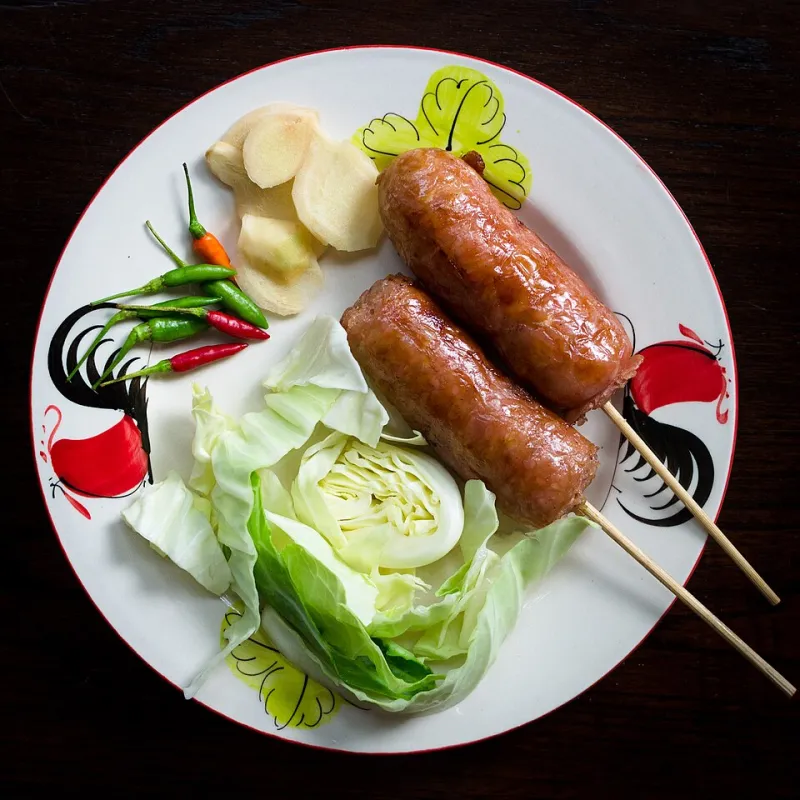
Photo: Takeaway, CC BY-SA 3.0, via Wikimedia Commons
Thai sausage rarely makes it onto a British menu. You'll find it grilled on a stick at a night market in Chiang Mai, folded into som tam in Isan, or sliced cold from a deli counter in Bangkok — but here it tends to stop at the edge of the takeaway list. That's a shame, because it is one of the most rewarding things to make and eat in the whole cuisine, and most of the ingredients are already in your nearest supermarket.
Here is what's what, how the three main types differ, and how to make sai ua at home without giving anyone food poisoning.
What Thai sausage actually means
The word 'sausage' covers three quite different traditions in Thailand. Sai ua is a fresh, coarse Northern sausage packed with herbs and red curry paste, grilled hard over charcoal. Naem is fermented pork, sour and faintly fizzy, eaten raw in Isan or fried until crisp. Moo yor is the smooth pink roll sold wrapped in banana leaf, closer to a pâté than a banger. They have almost nothing in common except pork and confidence.
Sai ua: the northern coil
Sai ua (sometimes written sai ua gai when chicken is used) is the signature sausage of Chiang Mai and the Lanna north. The meat is coarsely minced pork with a full curry paste built into it: dried chillies, lemongrass, galangal, garlic, shallot, coriander root, kaffir lime, toasted coriander seed and white pepper. It is stuffed into a wide hog casing and coiled into a spiral, then grilled over moderate heat until the skin blisters and the fat renders out.
The flavour is not subtle — herbal, fragrant, gently hot, with a sour-savoury edge from fish sauce. It is served with sticky rice, raw cabbage or long beans, and a bowl of nam phrik for dipping. Everyone tears pieces off with their fingers, and the raw vegetables are there to cool the chilli, not to be polite.
Naem: sour, fermented, and best not imitated
Naem is made with pork, cooked sticky rice, garlic and salt, packed into banana leaf or casing and left to ferment for a few days. The rice feeds the bacteria, the pork sours, and the result is tangy and slightly springy — a bit like a very savoury salami, but softer. It appears in som tam, in fried rice, and skewered and grilled at markets.
Home fermentation of raw pork is genuinely worth respecting. If you are not set up for it, buy naem and cook it: sliced and fried until crisp at the edges, it makes an outstanding addition to fried rice or a sharp cabbage salad. If you are pregnant, immunocompromised, or cooking for someone who is, keep naem cooked rather than raw.
Moo yor: the pink roll
Moo yor is the smooth one — pork pounded to a paste with garlic, fish sauce, pepper and a little starch, wrapped in banana leaf and boiled. It is a Chinese-Thai borrowing and it slices like a soft frankfurter, served cold or fried with nam phrik. It is the easiest of the three for a British cook to pick up, because it is usually frozen and it keeps well.
Pork ratios that matter
Whatever you are making, the fat is the point. Sai ua wants roughly 70:30 lean to fat, and the fat should be back fat or belly, not whatever trims happen to be in the pack. Supermarket pork shoulder is a decent base but often too lean on its own, so buy a small piece of belly and mince it in. Ask the butcher to coarse-mince shoulder through a 6–8mm plate, or pulse it at home in short bursts and keep it cold. A sausage that has warmed up during mixing will be crumbly and dry.
Toast your own spices
This is the single step that separates homemade sai ua from a decent sausage into something people ask about. Toast coriander seeds, white peppercorns and dried chillies in a dry pan until they smell nutty — thirty seconds to a minute, and no longer. Pound them with lemongrass, galangal, garlic, shallot and coriander root, or blitz to a rough paste in a small processor. Fine powder is not the aim; a bit of texture is good.
Curing and cooking safety
- Keep everything cold — mince, bowl and hands. Work quickly and return the mix to the fridge.
- Use about 1.8% salt by weight of the meat. That is roughly 12g for 700g of pork and fat. It seasons and helps the bind.
- Mix and knead for three or four minutes until the mixture looks tacky and slightly stringy. That is what stops the sausage falling apart on the grill.
- Rest the mix in the fridge for at least four hours, ideally overnight, for the paste to settle into the meat.
- Cook to 71°C in the centre. Do not taste the raw mix, however good it smells.
- Fermenting naem at home needs a curing salt and controlled temperatures. For most kitchens, buying it is the sensible answer.
Where to buy Thai sausage in the UK
London's Thai supermarkets are the reliable option — Talad Thai in Wimbledon is the best-known, and the shops around Chinatown and Shepherd's Bush carry frozen sai ua and moo yor most weeks. Outside the capital, look to the larger Asian grocers in Manchester, Birmingham, Leeds and Glasgow, and to Thai restaurants, many of which will sell you frozen sausages from their own supply if you ask nicely. Online Thai grocers and the bigger Asian supermarket websites will deliver vacuum-packed sai ua nationwide.
Sai ua at home
Makes about 800g, enough for four as a starter or two very happy people.
For the paste:
- 10 dried bird's eye chillies, soaked and deseeded (use 6 if you want it gentler)
- 2 lemongrass stalks, white parts finely sliced
- 20g galangal, chopped
- 6 garlic cloves
- 3 shallots
- 2 tbsp chopped coriander root or the thick lower stems
- 1 tbsp toasted coriander seeds
- 1 tsp white peppercorns
- 4 kaffir lime leaves, shredded
- 1 tsp sea salt
For the sausage:
- 500g pork shoulder, coarsely minced and very cold
- 150g pork back fat or belly, minced
- 12g fine sea salt
- 8g palm sugar
- 15g fish sauce
- 1 tbsp toasted sticky rice, ground (optional, helps bind)
- Hog casings, 32–35mm, soaked
Pound or blitz the paste ingredients to a rough paste. Mix with the cold meat, salt, sugar, fish sauce and rice powder, then knead for three to four minutes until tacky. Chill, covered, for at least four hours or overnight. Stuff into the casings and coil, pricking a few holes with a pin, or shape the mix into small patties if you'd rather skip the casings — they work beautifully on a griddle.
Grill over medium heat for six to eight minutes a side, turning often, until well browned and 71°C inside. If the skin threatens to split, poach the coil in water at 75°C for fifteen minutes first, then finish on the grill for colour.
How to serve it
Sticky rice, raw cabbage leaves, cucumber, a few bird's eye chillies and a dish of nam phrik. A cold lager helps. If you are feeding a crowd and the sausages are the main event, add a sharp cucumber salad and plenty of rice — the richness is the joy of it, but it needs something clean alongside.