Sour, Salt, Crunch: Thai Salad Logic for a British Winter Table
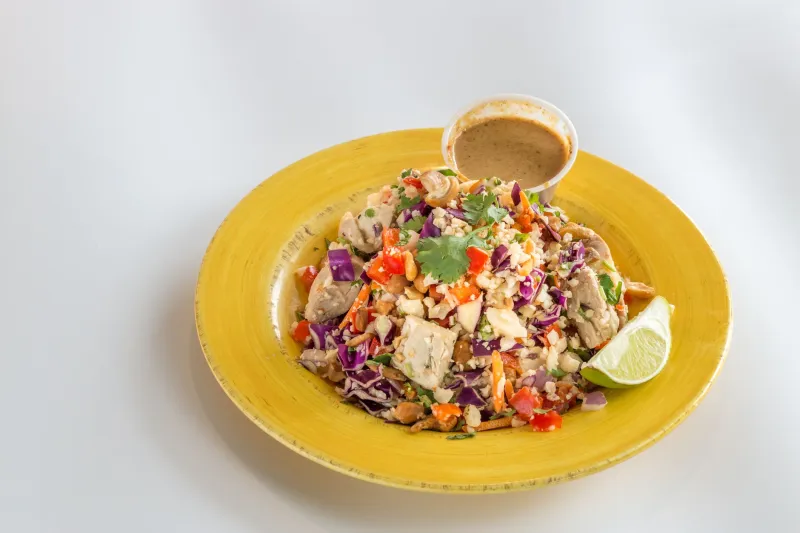
A Thai salad is not a side dish trying to be virtuous. It is a full argument in a bowl: sour enough to wake you up, salty enough to make the next mouthful necessary, hot enough to keep things interesting, and crunchy enough that you notice every ingredient. That is the useful idea to borrow as the UK settles into its grey, dark-afternoon season. You do not need baby spinach, fragile herbs flown halfway round the world, or a dressing that tastes like sweet chilli sauce from a pub fridge. You need a winter larder, a sharp knife, and a willingness to taste as you go.
At Sukothai Kitchen, we are not asking you to replace a Sunday roast with a plate of raw vegetables. We are making a smaller, more practical case: Thai salad thinking belongs in a British winter kitchen because it turns sturdy, affordable produce into something bright and forceful. Red cabbage, carrots, beetroot, apples and citrus are not compromises. They are excellent raw materials for a yam-style salad.
A salad is a balance, not a leaf
In Thailand, the word yam covers a family of salads that are often built around cooked or raw vegetables, herbs, noodles, meat or seafood. The common thread is not lettuce. It is contrast. Something sour. Something salty. Something hot. Something sweet, but only as a background note. And texture: crunch, snap, chew, softness, perhaps a little fat from peanuts, coconut or fried shallots.
That is why a Thai salad can sit next to rice and grilled chicken without feeling like an afterthought. It has enough salt and acid to behave like a condiment, but enough bulk and texture to be a dish in its own right. Once you understand that structure, the supermarket becomes less of a limitation and more of a puzzle worth solving.
The yam formula that travels
Start with a dressing formula rather than a recipe. For two to three generous servings, whisk together roughly two tablespoons of lime juice, one and a half tablespoons of fish sauce, and one teaspoon of palm sugar. Add finely chopped chilli to taste. Taste it. It should be sharp first, salty second, and only faintly sweet. If it tastes like a dipping sauce, add more lime. If it tastes thin, add a little more fish sauce. If it tastes harsh, a pinch more sugar will round the edges without turning it into dessert.
This is the base. From there, you adjust to the ingredients. Cabbage wants a little more salt and acid because it is dense. Beetroot can take more acid and a bit more sweetness. Apple needs less sugar because it brings its own. Citrus fruit needs less lime, but it still needs fish sauce and chilli to stop the bowl tasting like a fruit salad.
Use palm sugar if you have it, but do not panic if you do not. Soft light brown sugar works well. Fish sauce is not optional, but it should not dominate. The aim is a dressing that tastes complete on the tip of a spoon, not one that announces its individual ingredients.
Three winter yams to start with
Red cabbage, carrot and apple
Shred a quarter of a red cabbage very finely, grate two carrots, and cut one crisp apple into matchsticks. Toss with the yam dressing and leave for ten minutes. The cabbage will soften slightly without losing its snap. Finish with toasted peanuts, crispy fried shallots if you have them, and a handful of mint or coriander if it is in reasonable condition. This is the gateway winter yam: cheap, crunchy, and excellent with roast pork, grilled chicken or a piece of fried fish.
Beetroot, orange and toasted coconut
Use cooked beetroot, not raw, unless you enjoy a very long chew. Cut it into thin wedges and toss with the dressing, segments of orange, and a little thinly sliced red onion. Add toasted desiccated coconut and crushed peanuts. The beetroot will stain everything, which is part of its charm. Keep the orange in fairly large pieces so it gives pockets of juice rather than disappearing into the dressing. This one is especially good with cold roast beef or a simple omelette.
Shredded Brussels sprouts with apple and citrus
Thinly slice raw Brussels sprouts, discarding the tough cores. Toss with the dressing, matchsticks of apple, and segments of orange or grapefruit. Add crushed roasted peanuts and a little chopped chilli. The sprouts are nutty and crisp, the apple is sweet and sharp, and the citrus keeps the whole thing light. It is a useful way to eat sprouts without roasting them into submission, and it sits happily on a table with leftover roast potatoes.
UK shopping notes: lime, fish sauce, palm sugar, chilli
Limes in Britain can be hit and miss in winter. Buy them firm and heavy for their size, and roll them firmly on the counter before juicing. Bottled lime juice is a fallback, not a first choice. If you are short, use a mix of lime and lemon, but taste again because lemon is more blunt.
Fish sauce varies more than people expect. Look for one that smells savoury rather than fishy-sweet, and use it as a seasoning rather than a pour. Palm sugar comes in discs or jars; grate or shave it so it dissolves quickly. If you only have brown sugar, start with less than you think.
Chillies are the variable that trips up most British cooks. A supermarket bird's eye can be fierce; a large red chilli can be almost sweet. Chop them finely, taste the dressing, and add more at the table if you want heat. Do not try to make the salad spicy enough for everyone in one go. Thai salads are often adjusted at the table for good reason.
And please, leave the sweet chilli dipping sauce in the cupboard. It has its place, but it is not a yam dressing. The point here is balance, not a sticky glaze.
Make crunch the point
A winter Thai salad should not apologise for being raw, sturdy or sharp. It should make the most of what is actually good in a British greengrocer in November: tight red cabbage, sweet carrots, earthy beetroot, crisp apples and citrus that needs a purpose. Build the dressing to taste, keep the textures varied, and serve it alongside something warm. That is not a compromise on Thai cooking. It is exactly the kind of practical, flavour-led cooking that belongs in a British kitchen.